Connect your solar panels, battery, wind turbine, and vehicle-to-grid
Whether you're installing solar panels, battery storage, a wind turbine, or vehicle-to-grid technology, we're here to help you connect safely so that you can get the most value from your investment.
Distributed generation is electricity generated at your property, such as from solar panels or wind turbines. Depending on your setup, you may be able to use that energy at your property, store it for later, or export excess electricity back to the local distribution network (the network).
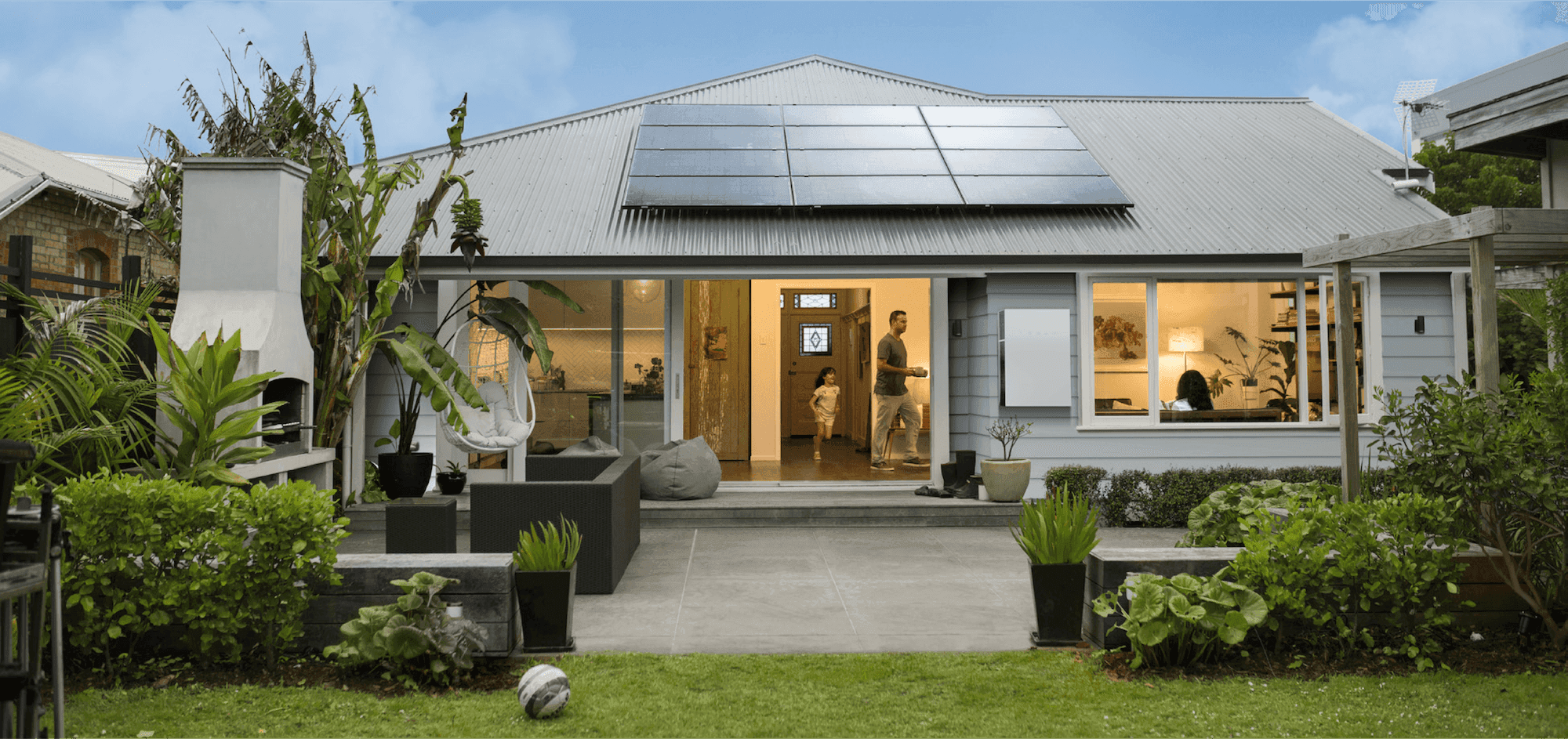
How your system works
Uses your own electricity first. | |
Exports excess electricity. | |
Stays connected to the network. |
Before you get started
Understanding a few things before you choose and install a system can help you make informed decisions and avoid delays later.
- Explore trusted guidance
Read the free EECA guidance and check out trusted organizations such as SEANZ before making any decisions. - Think about your electricity needs
Consider how much electricity you use now. Think about any future plans, such as getting an electric vehicle (EV), adding a battery or installing new electric appliances. Your installer can help you choose a system that suits your property and needs. - Check what's possible at your property
Where you live and the capacity available on the local network can affect how much electricity you're able to export. Check our export capacity map, read about managing electricity exports and talk to your installer about your options before going ahead. - Talk to your electricity retailer
Your retailer can explain how adding generation may affect your electricity plan, what you'll be paid for electricity you export and whether your electricity meter needs to be changed or reconfigured - Understand your ongoing responsibilities
Ask your installer who is responsible for ongoing maintenance and what you need to do. Solar panels require regular, but gentle cleaning to maintain efficiency.
Pricing
The cost to connect your generation system depends on your requested export limit (connection size) and what is needed to connect it safely to the network. This may include application, assessment and / or testing fees. If network upgrades are required, then there may also be additional costs for the physical works that are needed. We’ll confirm any fees with you as part of the application process.
Upfront application fee
We will charge an initial application fee to help cover our costs to analyse and review the information you provide. The fee varies depending on the size of your connection.
The rates outlined below align with the Electricity Authorities new amendments to distributed generation fees, which took effect from 1 November 2024.
Connection size | Application fee (incl. GST) |
|---|---|
<10 kW | Free |
>10 kW and <100 kW | $885.50* |
≥100 kW and <1MW | $1,771.00* |
≥1 MW | $8,843.50* |
*In accordance with Schedule 6.5 under Part 6 of the Code
On-site observation and testing fee
Depending on the installation, we may conduct an inspection to ensure that we are satisfied with the installation. The fee varies depending on the size of your connection.
The rates outlined below align with the Electricity Authorities new amendments to distributed generation fees, which took effect from 1 November 2024.
Connection size | Application fee (incl. GST) |
|---|---|
<10 kW | Free |
>10 kW and <100 kW | $207.00* |
≥100 kW | $2,127.50* |
*In accordance with Schedule 6.5 under Part 6 of the Code
Network changes
In some situations, connecting a larger generation system may require upgrades or changes to the local electricity network.
Where additional infrastructure is needed to safely support your connection, the cost of these upgrades may need to be funded by you as part of a separate network upgrade project. We'll discuss any potential network requirements with you during the assessment process.
How we work together
Installing and connecting distributed generation is a shared responsibility. Vector, property owners, installers, and electricity retailers each play an important role in ensuring systems are approved, connected safely, and able to operate as intended. Understanding these responsibilities can help make the connection process smoother and avoid delays.
We'll help by:
- Explaining your connection options
- Assessing your application
- Identifying any network requirements or constraints
- Supporting safe and reliable connections
- Keeping you informed throughout the process
Vector's role
Application assessment and approval
- Process distributed generation applications within regulatory timeframes.
- Assess network capacity, constraints and export eligibility.
- Publish the pipeline process for export systems over 300 kW.
- Communicate application outcomes, conditions and export limits.
Network management
- Publish network capacity and constraint information.
- Set and manage export limits to protect network performance and safety.
- Publish up-to-date technical requirements
Property owner's role
Application and compliance
- Engage a qualified solar installer or registered electrician.
- Submit the connection application(s) or ask your installer to do it on your behalf.
- Meet application requirements, including any fees and conditions.
- Notify Vector of changes to the generation system.
Retailer arrangements
- Arrange an export or buy-back agreement with an electricity retailer.
Installer's role
Application and advice
- Submit the connection application(s) on behalf of the property owner and ensure technical information is accurate.
- Advise customers on network constraints and export requirements.
Installation and certification
- Install the system in accordance with approved standards.
- Provide required compliance documentation, including a Certificate of Compliance (CoC) and Record of Inspection (RoI).
Connection and metering
- Coordinate metering requirements with the electricity retailer.
- Ensure the import / export meter configuration is in place before the system is switched on.
- Advise customers of any actions needed to complete the connection.
Retailer's role
Metering
- Arrange installation or reconfiguration of import / export metering.
Export arrangements
- Offer and manage any export or buy-back agreement for exported electricity.
- Advise customers of any requirements relating to export payments.
Our process
Whether you're installing solar panels, a wind turbine, or another distributed energy system, there are a number of steps to complete before your system can connected to our network and export electricity. The process below outlines the key stages. Timeframes vary depending on the size and complexity of your generation system. Small systems may be approved in as little as 10 working days, while larger systems may require multiple approval stages and take several months to be approved. For a detailed explanation of approvals, assessments, timeframes and connection requirements, visit our Distributed generation connection process page.
Discovery | Choose an installer to design a power generation system that suits your needs. If you are planning a larger system, contact Vector early so we can help you understand the network requirements and start planning. |
|---|---|
Complete application | You or your installer submits a connection application to Vector using our online form. |
Waiting on decision | We review the information provided and let you know our decision. If approved, we confirm your connection requirements and any conditions that apply. |
Review & accept terms | Before your system is connected, review and accept the terms that explain how it can connect, operate and export electricity to the network. You will also need to accept the terms of your connection contract. |
Install & connect | Your electricity retailer arranges the correct meter. Your installer installs the system and provides the required documents. Once everything is ready and safe, and Vector has reviewed the documents and approved for the system to be turned on, you can start exporting electricity. |
Need help?
Whether you're just starting to explore distributed generation or you're ready to connect your system, we're here to help. Your installer can guide you through the technical requirements, and our team can answer questions about the connection process and what to expect at each stage.
Related distributed generation information
Distributed generation connection process
Learn about our process and typical timeframes
Technical information for distributed generation installers
Learn about our technical requirements
Managing electricity exports
Learn about exporting excess electricity back to our network
Distributed generation application pipeline
View the pipeline of large generation projects (300 kW and above)