Outage centre - common questions
We know having a power outage is inconvenient. Below are some of the most common questions. The easiest and fastest way to report outages is online. You can also check your address for existing outages and register to receive updates. Alternatively you can call us on 0508 832 867.
Firstly, you need to register directly with your electricity retailer — for example, Contact, Mercury, Genesis, etc. They hold your account information and pass that to us as the lines company.
We strongly encourage all medically dependent customers to have a backup plan in place and ensure your support network — such as family, neighbours, or carers — are aware of what to do in an outage.
If you don’t have a plan, we recommend speaking to your healthcare provider as soon as possible.
More information about what to do if you, or someone you know, relies on electricity as a medically dependent customer is available online at www.eranz.org.nz.
My power’s out but I’m not part of the outage area shown on the new map?
- The outage area shown on the map is an approximation only.
- If your power is out but your property is excluded from an outage very near your property, please report the outage via the Outage Centre.
- Please also send your name and address to our call centre at info@vector.co.nz and we will investigate.
Here are some handy tips to keep you safe during a power outage:
- Report the outage online or check your address for existing outages and register to receive updates.
- Use a torch instead of candles (a torch is safer).
- Switch off sensitive electrical equipment, such as your TV, computer and stereo as they can be affected by a power surge when power is restored.
- Keep the fridge closed so food will last longer while the power is off. A freezer will usually keep food frozen for up to 24 hours without power.
- Turn appliances off. Make sure elements on your stove, the kettle, and all heaters are turned off. This ensures they don't come back on without you noticing when the power supply is restored.
- Never use a patio heater, gas heater or bbq indoors during a power outage.
- Don't touch or use any electrical appliances while barefoot in damp or wet conditions.
- If you go out, be aware that streetlights and traffic lights may not be working.
- Don't go near any damaged power lines and electrical equipment - stay at least ten metres away.
- If you are concerned regarding health and safety, please either contact the health professional responsible for your care immediately, or go to the local hospital, or if it is an emergency, call 111.
There could be several reasons why you don’t have hot water, which depends on several factors:
- Where you live in Auckland (there are two different hot water systems)
- Whether you’ve experienced a power outage before losing hot water
If there’s been a power outage and you now don’t have hot water:
If you live in Central or South Auckland your hot water cylinder should automatically reheat when power is restored. Reheating can take six hours.
If power has been restored and hot water is still not available:
- Check that your hot water cylinder is on.
- If your hot water isn’t heated after six hours, please call us on 0508 VECTOR (0508 832 867) as there may be an issue with your meter box or with your hot water tank.
- If your hot water cylinder is heated by gas, contact a registered plumber.
If you live in North or West Auckland, your hot water may be controlled by the pilot wire system. Hot water pilot wires are separate from power lines.
Once power has been restored after an outage, we then repair network pilot wires. If you are still without hot water once we’ve restored network pilot wires, there may be an issue with your service pilot wire or the pilot wire relay inside the meter box, please call us on 0508 VECTOR (0508 832 867).
There hasn’t been a power outage and you don’t have hot water
- If your hot water cylinder is heated by electricity, call an electrician, or if it’s heated by gas, call a plumber.
Our main goal is to work as safely as possible to restore power to the greatest number of customers in the shortest time possible. We prioritise the restoration of power to critical infrastructure such as hospitals, airports, water plants and sewage plants.
We restore power in the following order:
- We prioritise repairs to main lines (high voltage lines), and equipment (substations) that will restore the most power to as many customers as possible at once.
- Next, we restore individual transformers and smaller lines (low voltage lines) to individual homes and businesses. Please note that we can’t fix an individual problem until the main lines and equipment are restored.
If your power remains off after power is restored to your neighbourhood, there may be an issue with your service line. Call us on 0508 VECTOR (0508 832 867)
After a power outage you may not have hot water. For more information on how hot water is restored, see the FAQ.
In severe storms with widespread damage, it may take us a few days to physically assess damage and restore power. In these cases, separate crews are used manage assessment and repair works. If a Vector truck leaves your neighbourhood before your power is back on, please know that we are not ignoring your problem.
There are two ways in which you can help prevent outages: keeping your trees trimmed and away from power lines, and checking before you dig on your property.
- Keeping trees on your property trimmed and away from power lines
Overgrown trees not only cause outages, they also prevent our crews from repairing equipment quickly and delay the process of restoring power.
Trees on private property are the responsibility of the property or business owner whereas trees on public roads are the responsibility of Auckland Council.
Under the Tree Regulations you are legally required to keep any trees located on your property a prescribed distance from network lines. You can find out more about your obligations as a tree owner here.
- Checking before you dig on your property
Underground electricity cables and gas pipes are everywhere. They could be under your lawn or driveway. You could hit an underground electricity cable or gas pipe which could result in injury to you, and loss of service for your neighbours.
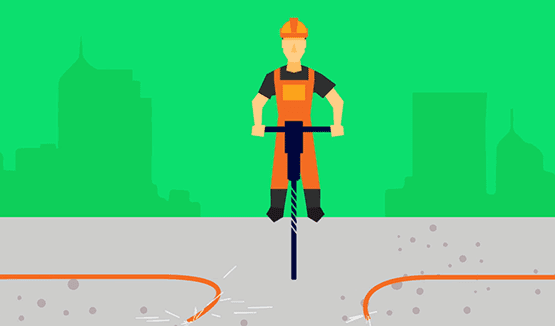
Before you dig, request free reference maps which show the approximate location of underground cables and pipes at least two days before you begin work. Call 0800 B4UDIG (0800 248 344) to find out the location of electricity cables or gas pipes under your property.
If you have cables or pipes below, make sure you avoid digging in their location. If you are breaking concrete and need equipment such as a rock breaker or excavator to dig but have established that there are cables or pipes nearby, make sure you get a professional contractor to carry out initial digging work.
For more information on reference maps, please click here.
The Auckland region has a mix of both overhead and underground power lines. 55% of customers have power lines underground in front of their properties. All new developments in the region have power lines underground as the site works for construction and road building typically provide easy and cost-efficient access to install the lines.
However, some areas have overhead power lines because:
- Undergrounding costs up to 10 times more per kilometre than overhead power lines
- Costs are especially high in areas of Auckland built on hard volcanic rock which is common in central Auckland.
- In rural areas, undergrounding power lines is prohibitively expensive given the lower population numbers per kilometre.
The cost of undergrounding ultimately ends up with consumers, which is why we still use overhead power lines in some cases. They’re affordable and easy to repair when something goes wrong. We use the technology that’s best for each area so we keep the costs down for our customers.
Wouldn't undergrounding all power lines prevent outages?
Unfortunately, faults still occur on underground electricity cables that result in outages. These can happen when:
- Contractors or DIYers hit underground electricity or gas cables
- Underground cables are more resilient to tree damage but can still be damaged by storms if trees are uprooted.
Underground faults may also take longer to find. A field crew may spend hours digging up sections of a road before identifying where the issue lies.
We have service standards which apply in normal weather conditions on our electricity network. In extreme weather conditions or major adverse events outside our control, the usual service standards do not apply, although every effort is made to restore power as quickly as possible.
Our service standards cover:
- The time we take to restore power
- The number of interruptions you may experience
- The power quality you can expect
Our residential service standards are detailed in this brochure.
Our business and commercial service standards are detailed in this brochure.
Please call us on 0508 VECTOR (832 867) or email us if you have any questions.
As a residential customer, if you report an outage and the issue is found to be on the lines or equipment that you own, we won't charge you for the call out. We’ll make sure the line is safe and you’ll need to arrange your own repairs at your cost. If you’re one of our commercial customers, your electricity retailer may charge you for the call out.
Bad weather, especially gale-force winds, can cause widespread outages when trees come into contact with power lines. Even when electricity cables are underground, tree roots can cause damage to cables if trees fall.
During a storm, we physically assess the extent of the damage to the network, so we can coordinate our field crews repair work. As a storm progresses, the damage and therefore the restoration focus areas can change.
Our main goal is to work as safely as possible to restore power to the greatest number of customers in the shortest time possible. We prioritise the restoration of power to critical infrastructure such as hospitals, airports, water plants and sewage plants.
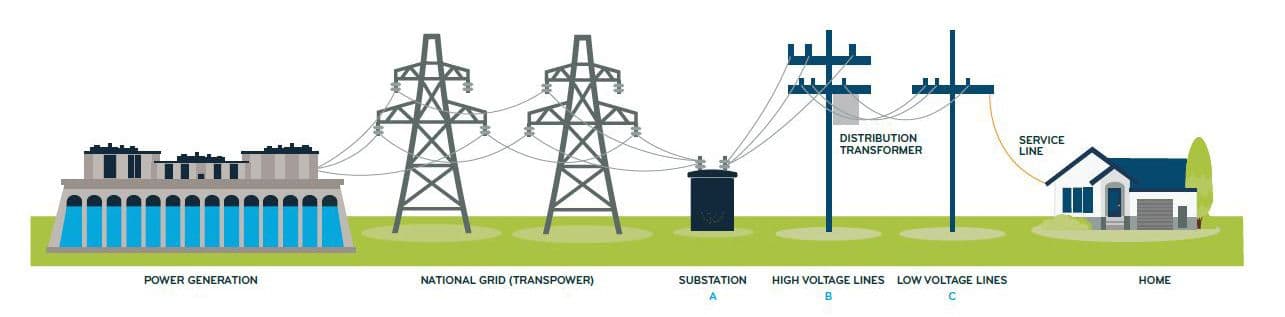
We restore power in the following order:
- We prioritise repairs to main lines (high voltage lines), and equipment (substations) that will restore the most power to as many customers as possible at once.
- Next, we restore individual transformers and smaller lines (low voltage lines) to individual homes and businesses. Please note that we can’t fix an individual problem until the main lines and equipment are restored.
In severe storms with widespread damage, it may take us a few days to physically assess damage and restore power. In these cases, separate crews are used manage assessment and repair works. If a Vector truck leaves your neighbourhood before your power is back on, please know that we are not ignoring your problem.
During the first few days after a widespread event, it may be difficult to provide accurate estimates for restoration times to individual properties.
After a power outage you may not have hot water. For more information on how hot water is restored, click here.
Unplanned outages occur as a result of damage to network electrical equipment which may or may not be immediately visible. Visible damage to equipment could include a broken cross arm or a power pole that has been hit by a car. If power lines are overhead and the damage is not immediately visible, our crew will have to inspect the length of the line on foot in order to identify where the fault has occurred – this can take hours in rough terrain or at night.
If power lines are underground, our crew will have to dig in a specific area to identify the fault before fixing it. Once the fault has been fixed, our crew will then reinstate the pavement or road.
If your property has been affected by an unplanned outage, please note that our crew will not necessarily be working near your property as the site of the fault may be kilometres away.
Once our crews have assessed the repair work required, they will provide an estimated time for when power will be restored. However. complications may arise or additional work is required once repairs have started which could extend the estimated restoration time. For example, crews may need additional equipment when digging if they come across hard rock or specialist utility arborists are needed to remove tree branches before repairs can begin.
Your property may be affected by an outage caused by damaged equipment either on our network or on your property. If your power is still out once we've repaired damaged equipment on our network and you report this to us, then we will send a line mechanic to your property. If the issue is found to be on your private equipment e.g. your service line, rather than on our network, we will let you know the next steps you can take to have repairs made.
If the power in your home remains off after power is restored to your neighbourhood, there may be an issue with your service line - this is the power line that runs from the street to your house. Call us on 0508 VECTOR (0508 832 867).