Connect together
This is the place where you can stay up-to-date with the latest updates on the Vector Network Connection Standard, access valuable resources and information, and collaborate with us as we strive to build a smarter network.
Contact us
Email connecttogether@vector.co.nz
.png&w=3840&q=75)
Vector's network connection standard - connected electric vehicle chargers for safe and compliant charging
Vector requires all Electric Vehicle (EV) chargers installed on the Vector Electricity Network to comply with Standards New Zealand (SNZ) for safe and effective residential and commercial charging; SNZ PAS 6011:2021 and SNZ PAS 6010:2021, respectively. These standards provide guidance on the safe installation of smart home chargers. In addition, a copy of the Certificate of Compliance (CoC) must be issued to Vector. Compliance with these standards also ensures that customers will be able to benefit from load management, should it become available to them in future.
Vehicle-to-Grid (V2G) chargers need to comply with the above standards, and also with Vector’s distributed power generation requirements (refer to Section 5.12, ESA002) to ensure public safety and quality of supply. This is because V2G involves bidirectional electricity flow (i.e electricity flowing both ways between Vector’s network and the customer),To ensure the safety and effectiveness of Vector's electricity network, a copy of the CoC, including the ICP number (unique installation control point number), must be provided as soon as possible after installation to EVinfo.applications@vector.co.nz by either the installer or customer. The CoC helps Vector manage its network more efficiently.
This Network Connection Standard is effective from 1 April 2023
Smart hot water load control
As of 1 April 2023 (with a grace period till 1 October 2023), for new and replacement installations for Low Voltage (LV) customers (i.e. less than 100 Amps):
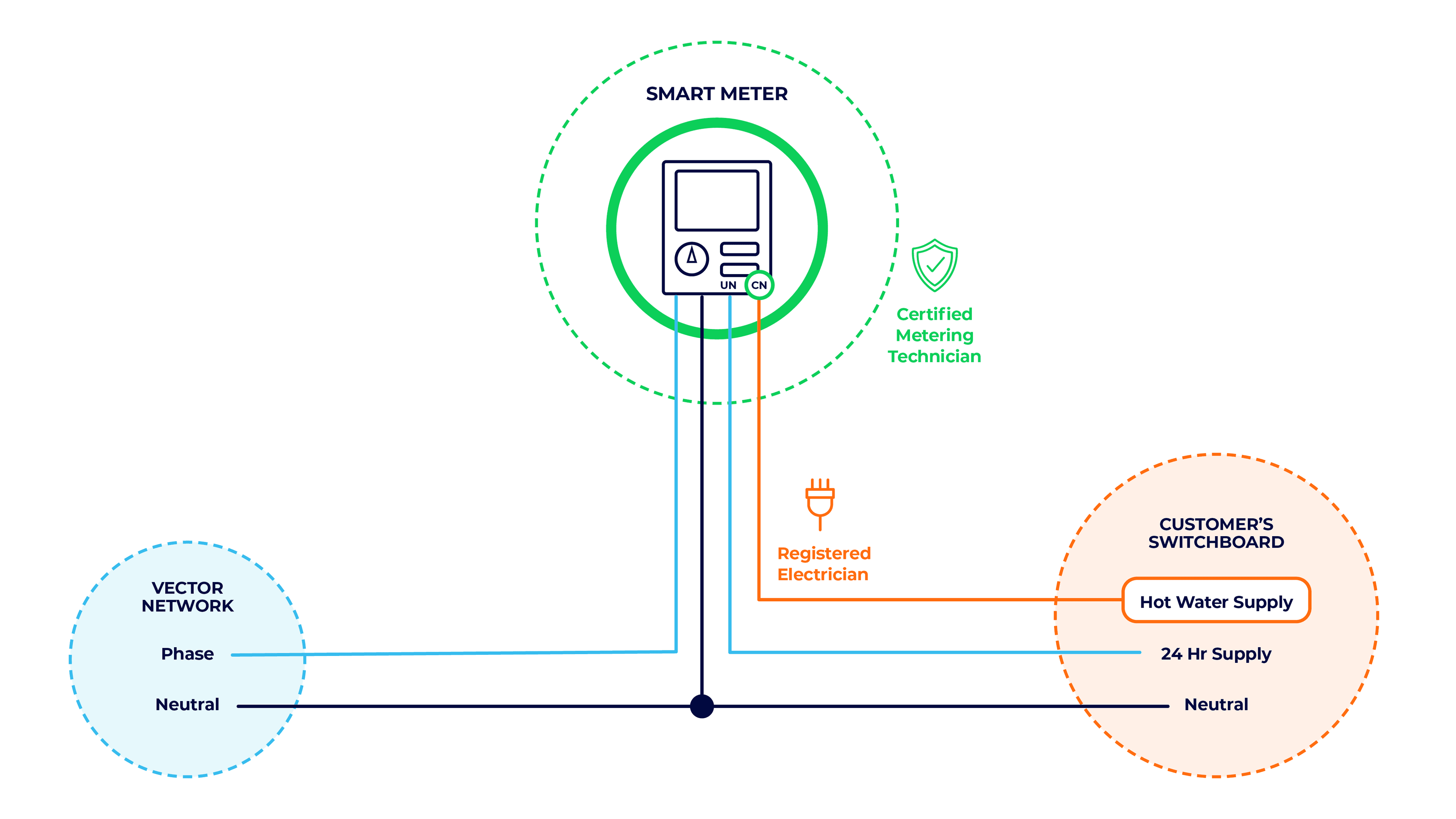
- For instances where customers have suitable controllable load (i.e. electric-water heater with storage capacity greater than 50L heated with an element greater than 1.2kW) the controllable circuit must be wired into a separate controllable element of the smart meter, which may be internal to the smart meter or an external relay (exception).
- If applicable, other controlled load such as irrigation pumps, pool pumps, electric vehicle charging, storage space heaters and underfloor heating must not be wired into the same controllable element as the electric-water heater circuit.
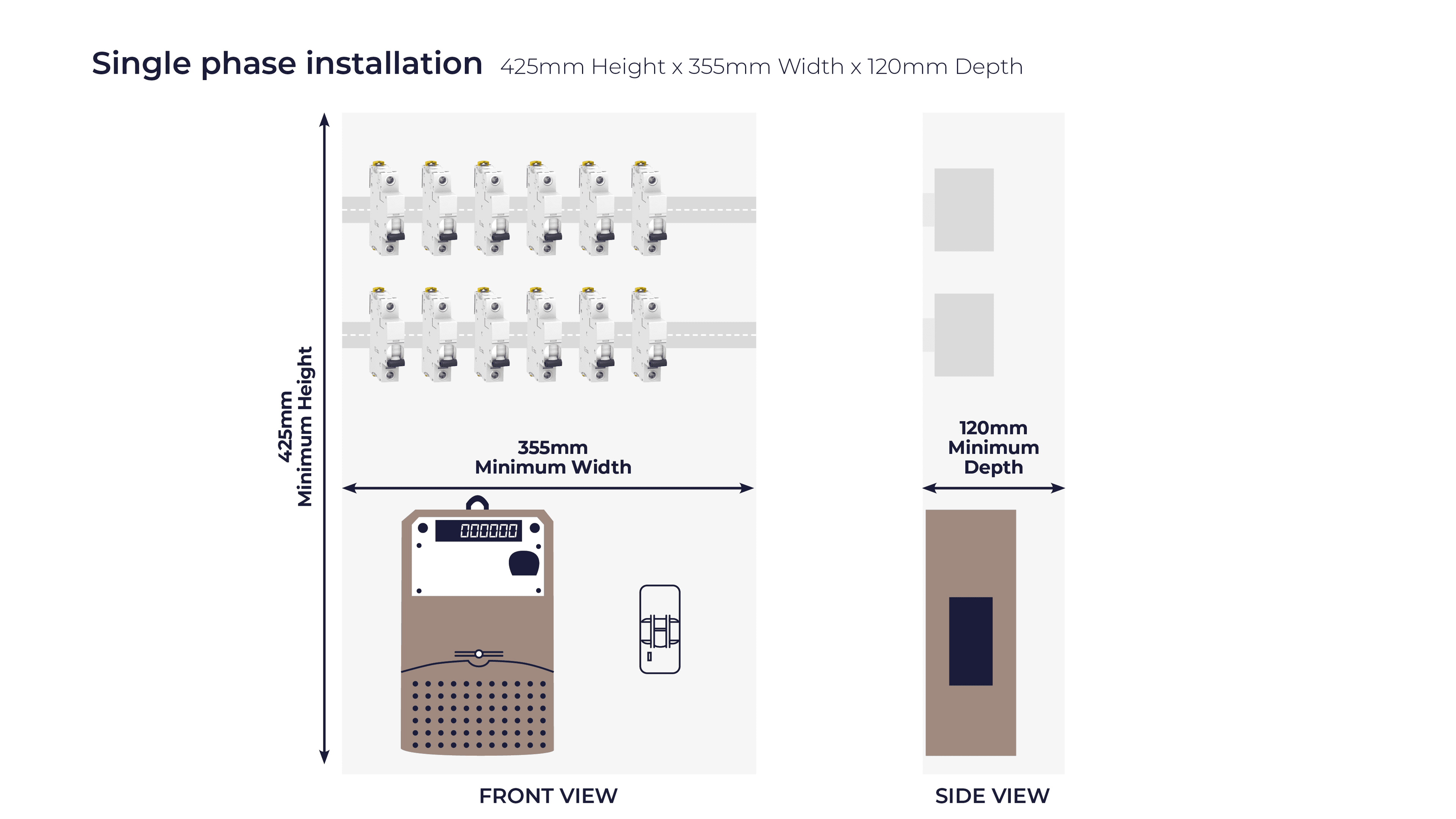
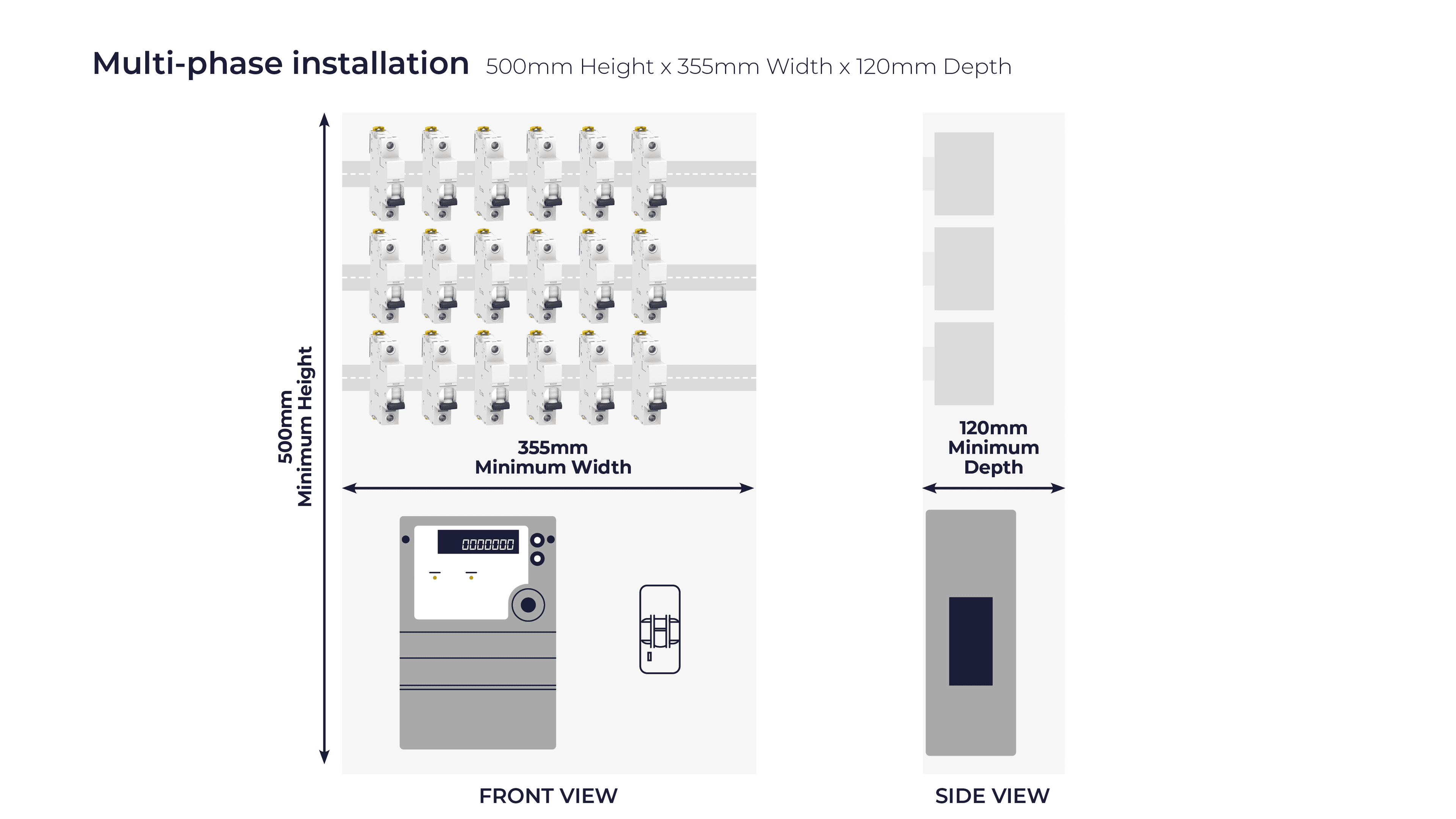
Metering enclosure size shall be sufficient to accommodate the revenue meter(s) with or without the control devices. As a guide the following minimum space within the enclosure is applicable on a per device basis. For minimum internal dimensions, refer to the diagrams below: