Our sustainability strategy
As a leader in the energy sector, we have a big part to play in enabling decarbonisation here in Aotearoa, New Zealand – and globally. Our focus is on creating smarter energy solutions that meet the evolving needs of electricity consumers, lower emissions, whilst also keeping costs affordable for our customers.
Some of our initiatives in action:
We believe our approach to sustainability breaks through silos, as we collaborate with community, local council, government, customers, suppliers, academic institutions, commercial partners, and regulators to deliver innovative, long-term solutions and build shared resilience.
- Vector electrifies Auckland bus depots: Vector has joined forces with Auckland Transport (AT) to help electrify Auckland’s bus fleet. We are currently on track to see the full fleet of 1,400 buses converted to zero emissions vehicles by 2035. The first fully electric bus depot was opened in Panmure.
- Development of Diverge for faster and more reliable data processing: Vector Technology Services (VTS) has developed Diverge, which enables real-time energy data access to support faster billing, smarter grids, and a cleaner energy future.
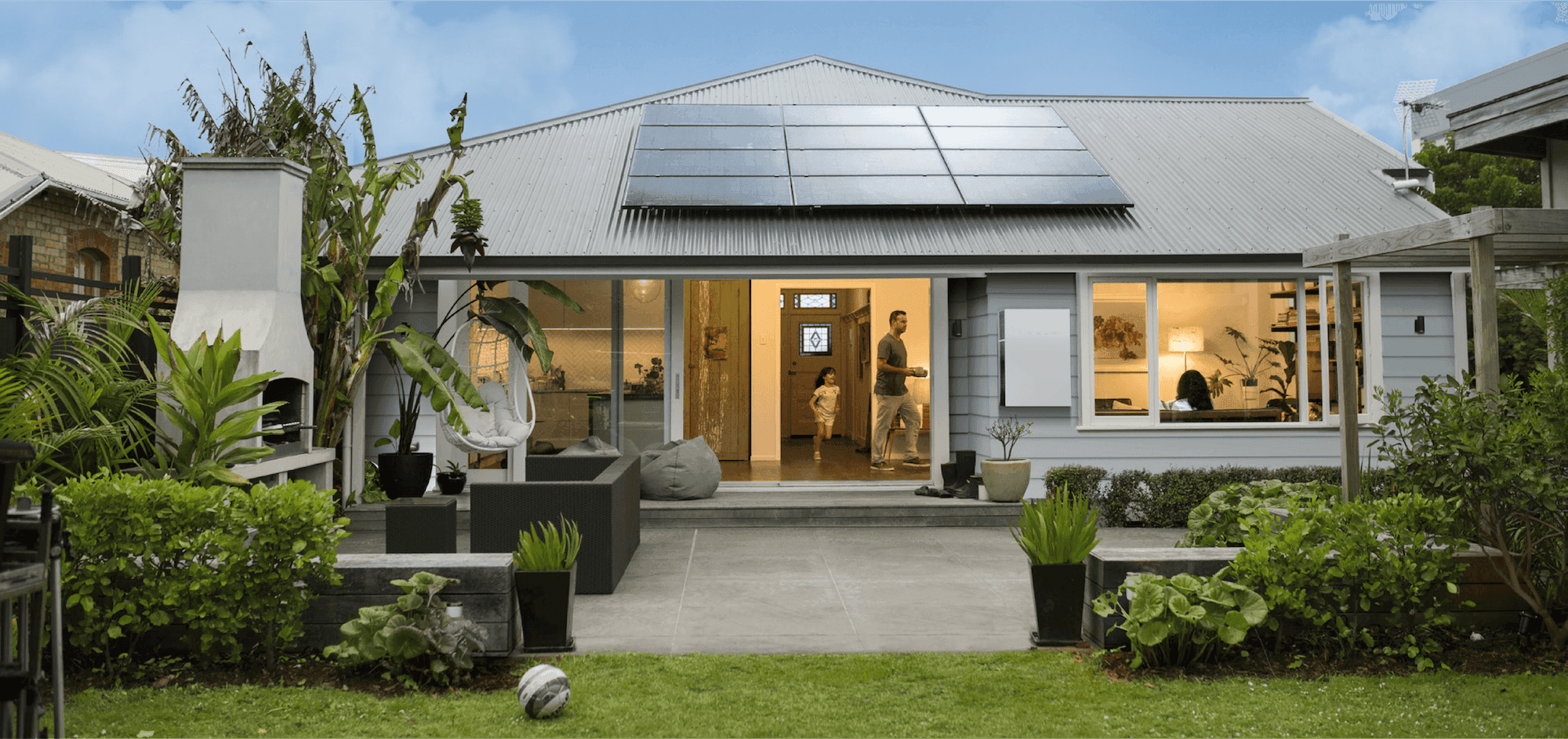
- Exploring distributed generation: Working with Google, we're developing the tools and modelling needed to manage the networks of the future, including how to get more solar and battery storage into our network.
- Reducing our own emissions: To lead by example, we have been taking actions to reduce our own operational emissions. In FY2021 Vector set an absolute emissions reduction target to reduce scope 1 and 2 emissions (excluding electricity distribution losses) by 53.5% by FY2030 from a FY2020 baseline. Each year, Vector tracks and reports progress against the FY2030 target and will continue to do so through to FY2030. The FY2030 target was achieved in FY2025 but not in FY2026. In August 2026 we set a new target, aiming to reduce our scope 1 and 2 emissions (excluding electricity distribution losses) by 71.8% by 2040 from a FY2020 baseline. We will formally disclose performance against the FY2040 target in our next FY2027 climate statement and we will continue to track and disclose progress against our FY2030 target. We will formally disclose performance against the FY2040 target in our next FY2027 climate statement and we will continue to track and disclose progress against our FY2030 target. We will formally disclose performance against the FY2040 target in our next FY2027 climate statement and we will continue to track and disclose progress against our FY2030 target.
Targets and reports
Below is a summary of key metrics, targets and sustainability reports. Our disclosure of metrics supports our stakeholders to make informed choices to support their sustainability transition.
Carbon footprint
Vector’s Scope 1, 2, and 3 emissions are disclosed annually in our annual report and our Climate Statement.
Emissions trend by scope in tCO2e:
Emissions Category | FY20 (base year) | FY26 | % Change |
|---|---|---|---|
Scope 1 | 22,933 | 13,870 | -40% |
Scope 2 | 33,087 | 30,776 | -7% |
Scope 3 | 1,656,403 | 735,205 | -55% |
TOTAL | 1,712,423 | 779,851 | -54% |
Science-based reduction targets
Vector is targeting a reduction of absolute Scope 1 & 2 greenhouse gas emissions (excluding electricity line losses) of 71.8% by FY2040 from a FY2020 base year. The target is based on the Science Based Target initiative methodology and is consistent with reductions required to keep global warming to 1.5C. This is in addition to the shorter term target of to reduce scope 1 and 2 emissions (excluding electricity distribution losses) by 53.5% by FY2030 from a FY2020 baseline, as noted above. Neither of these targets rely on offsets. Instead, these targets confirm our focus on driving measurable decarbonisation across our operations. Our targets have not been validated by SBTi because SBTi’s methodology provided for the inclusion of emissions related to electricity distribution losses (see below), which we have excluded. See our climate statement for further detail on how we are tracking towards the targets and the key risks to achieving the FY2040 target.
Electricity distribution losses
Vector has elected to exclude emissions associated with such losses from our emissions reduction target. This allows our target to focus on emissions that we can more readily manage. Electricity distribution losses are not like a water or gas leak; they are an inherent characteristic of electricity distribution networks. Although we can measure these losses, and report their associated emissions based on New Zealand’s published electricity generation emission factor, we can never fully remove them as distribution losses are largely an inevitable by-product of electrical conduction.
Climate statement
Our latest climate statement shows that climate change brings both risks and opportunities for Vector, and that with our diverse portfolio of energy solutions businesses, we believe we are well positioned to accelerate the transition to a lower carbon energy system. This is aligned with our aim to enable the electrification of Auckland while at the same time delivering safe, reliable and affordable energy solutions for customers.
Sustainability Governance
Information regarding our corporate policies, including our sustainability, environmental, diversity and inclusion, whistle-blower, and our code of conduct can be found on our policy page.
Supply Chain Management
Vector is working with our suppliers to improve supply chain transparency and be part of our sustainability transition. Vector’s Supplier Code of Conduct sets out our social, environmental and ethical requirement.
Environmental Certification
Vector is certified to and maintains its ISO14001 standard (since 2017).
Sustainable Development Goals
Vector has identified five priority goals from the United Nations Sustainable Development Goals that we will actively contribute to in the short term.
- Ensure access to affordable, reliable, sustainable and modern energy for all. Disruption of the current energy model will result in increased renewable energy while creating opportunities for new models to lower costs for all.
- Ensure sustainable consumption and production patterns. Circular solutions reduce waste and carbon, create efficiencies and commercial opportunities, and organisations play a key role in investigating possible solutions. Procurement and supply chain risks & opportunities need to be monitored and managed. See our Supplier Code of Conduct
- Make cities inclusive, safe, resilient and sustainable. Holistic goal that aligns well to Auckland’s ambitions – resilience, energy efficiency and affordable housing.
- Take urgent actions to combat climate change and its impacts. The transition to a low carbon economy will require commitment from the energy sector. With an extensive network of assets the business is also exposed to the physical risks of climate change. Both of these require a business response.
- Underpinned by: Revitalise the global partnerships for sustainable development. Collaboration with other businesses, government and other organisations is a key foundation for achieving the goals. Vector will continue to develop partnerships within New Zealand and globally.